Work / GetMega
Poker, minus the bling
- Role
- Founding designer, game and product design, 2020
- Team
- Started solo, later built a team of 9
- Methods
- Player research, competitor teardowns, wireframes, playtests
- Outputs
- Portrait poker game, table UI, controls, motion
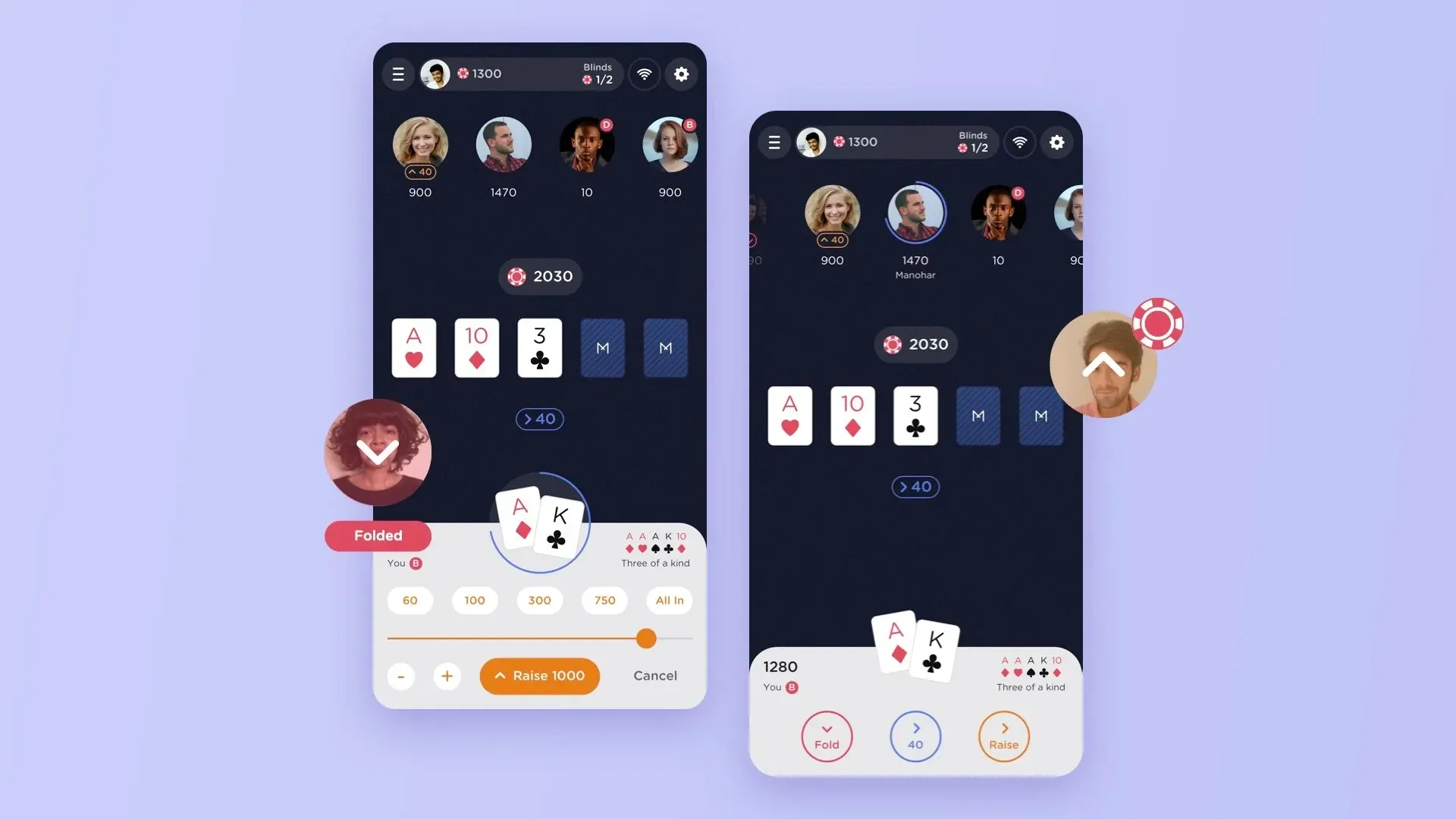
GetMega is a real money gaming platform aiming to be India’s gold standard for safe, skill-based gaming. I joined as fourth employee and founding designer, later building a team of nine.
This is how I reimagined Texas Hold’em Poker, end to end.
Success story
In March 2020, GetMega launched its own Poker. Revenue jumped 471%, and kept growing more than 90% month on month for the next few months.
Increase in revenue
Increase in monthly active players
Increase in deposits
Increase in revenue per player
A UX designer building a game
Mayank, our CEO, wanted UX inside the gameplay and a friendly, app-like look, not a gamified one. I was game designer, product designer and, in practice, product manager.
Context
GetMega began with games against the computer, like Dot’n’Dash and Fruit Ninja. We needed player versus player, and research pointed to Texas Hold’em.
Three key challenges
With product leadership, I prioritised ideas on user need, business value, tech feasibility and strategy. Three pain points stood out.
01. We misunderstood our players
We’d been building for college students and prioritising casual games like Carrom and Pool. Our active players told a different story.
02. How the industry looked
Online poker is male-dominated, and competitors advertised with hyper-sexualised female dealers.
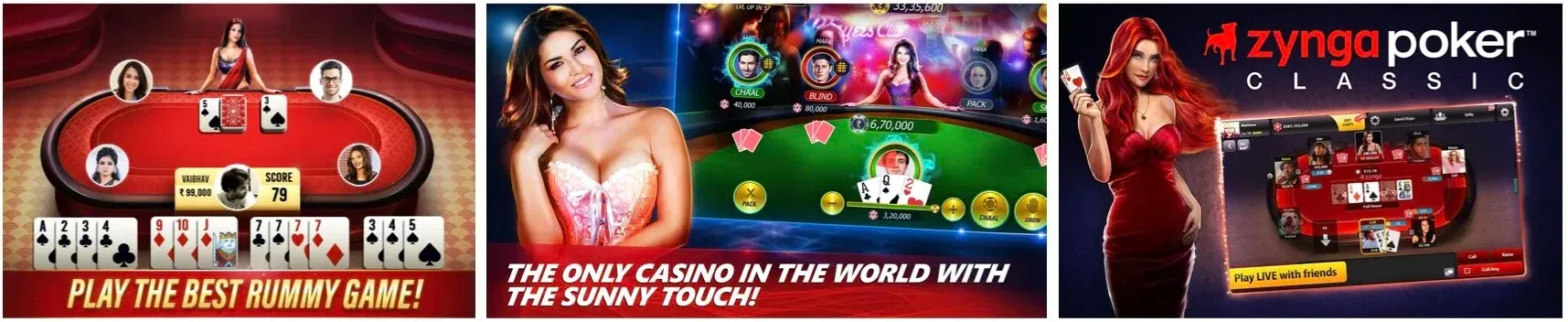
Competitors marketed poker with hyper-sexualised dealers
03. Every app looked the same
Competitors were all landscape, built around a round table, with the same interactions and cluttered, gaudy, generic graphics.
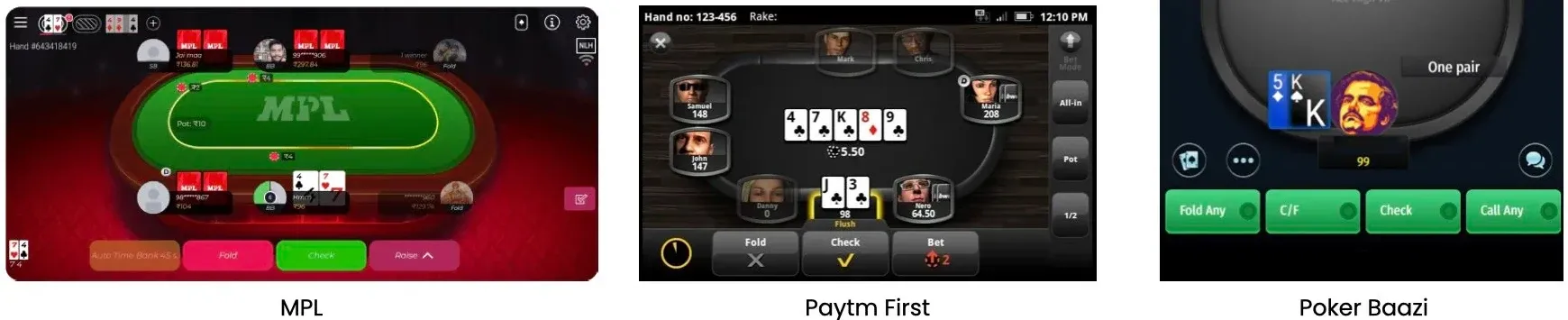
MPL, Paytm First and Poker Baazi: landscape, cluttered and alike
Problem statement
Build a Texas Hold’em poker experience that is user-friendly, gender-neutral and in portrait mode, for salaried millennials in India.
How Texas Hold’em works
A standard 52-card deck. Players compare hands using the hand rankings, everyone bets an agreed amount with chips, and the best hand wins.
Two private cards each. Blinds are posted and the first bets go in.
Tap a move to see what it does.
Texas Hold’em elements
There’s a lot happening on one screen, so I listed every element and grouped them.
01Game elements
- Pot
- Community cards
- Blinds
- Dealer
- Hand strength
- Cheatsheet
02Your information
- Your cards
- Stack
- Timer
- Last move
- Controls
03Other players
- Profile
- Stack
- Timer
- Last move
- Folded or active
04Secondary enhancers
- Reactions
- Voice
- Previous hands
- Onboarding
Conceptualising
I sketched each element on its own, then explored how they could come together.
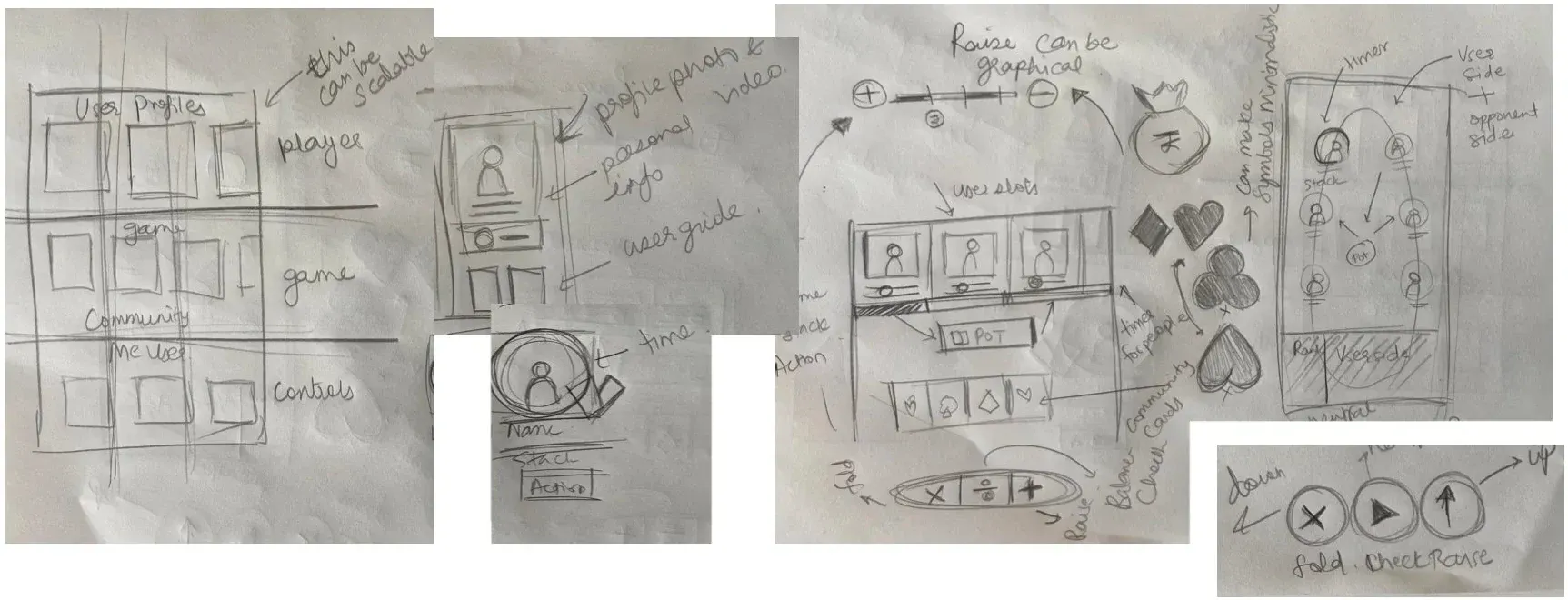
Paper sketches: each element first, then the full layout
User controls
Fold, check, call and raise are the heart of every hand, so the control panel could set us apart. I explored segmented buttons, number pads, quick pot amounts, sliders and round buttons.
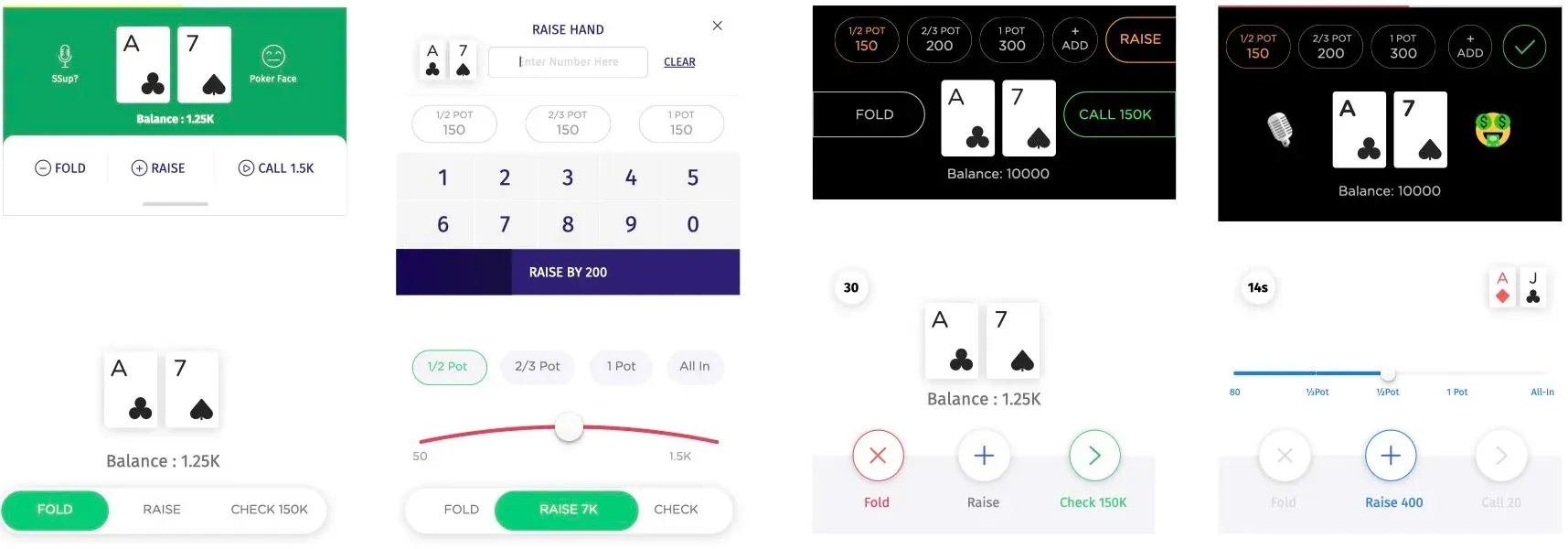
Control panel explorations
Low fidelity wireframes
I prototyped four concepts and tested them internally with 22 teammates from different functions.
Concepts prototyped
Teammates tested
Preferred Concept 4, the easiest to use
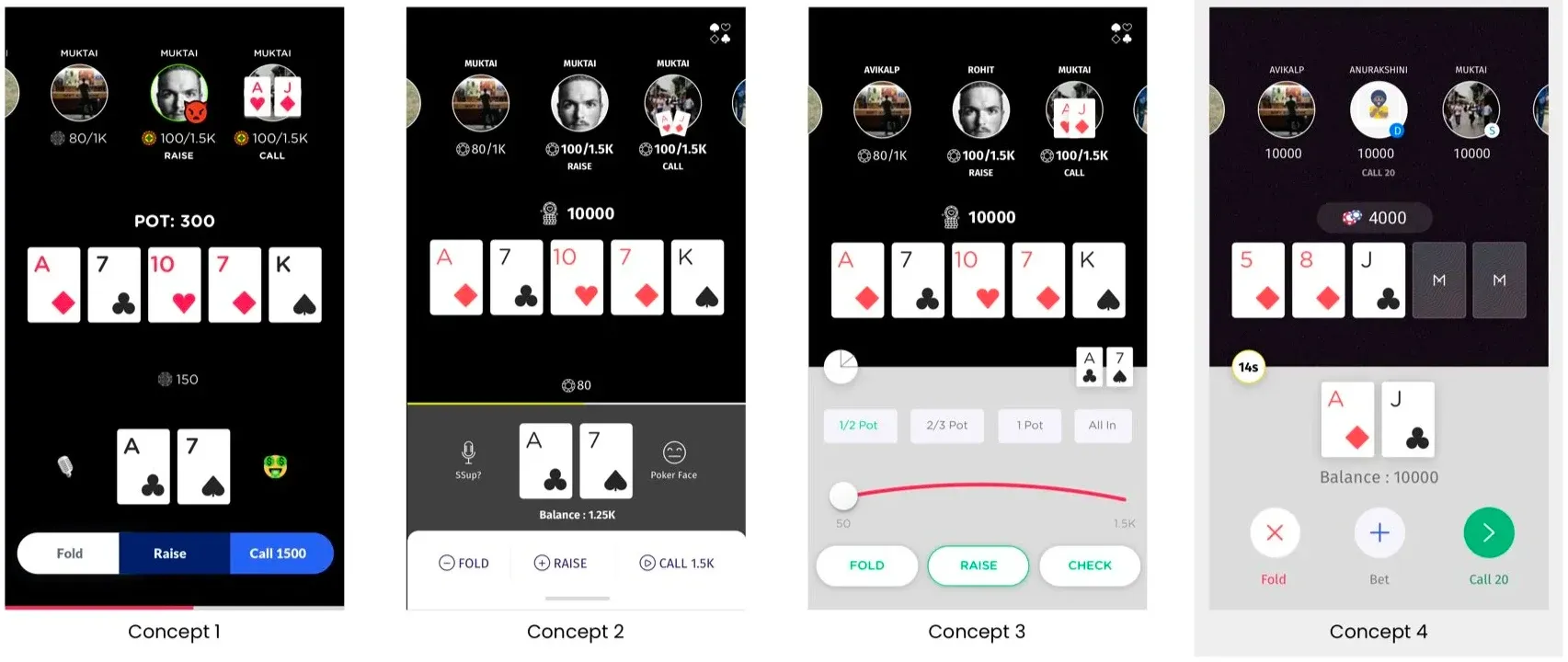
Low fidelity concepts 1 to 4. Nearly 90% of 22 teammates preferred concept 4
Visual design
- Flashy
- Gold and silver accents
- Bling in every corner
- Pleasing and minimal
- Almost utilitarian
- Players immersed in the game
I put together a mood board to capture the look.
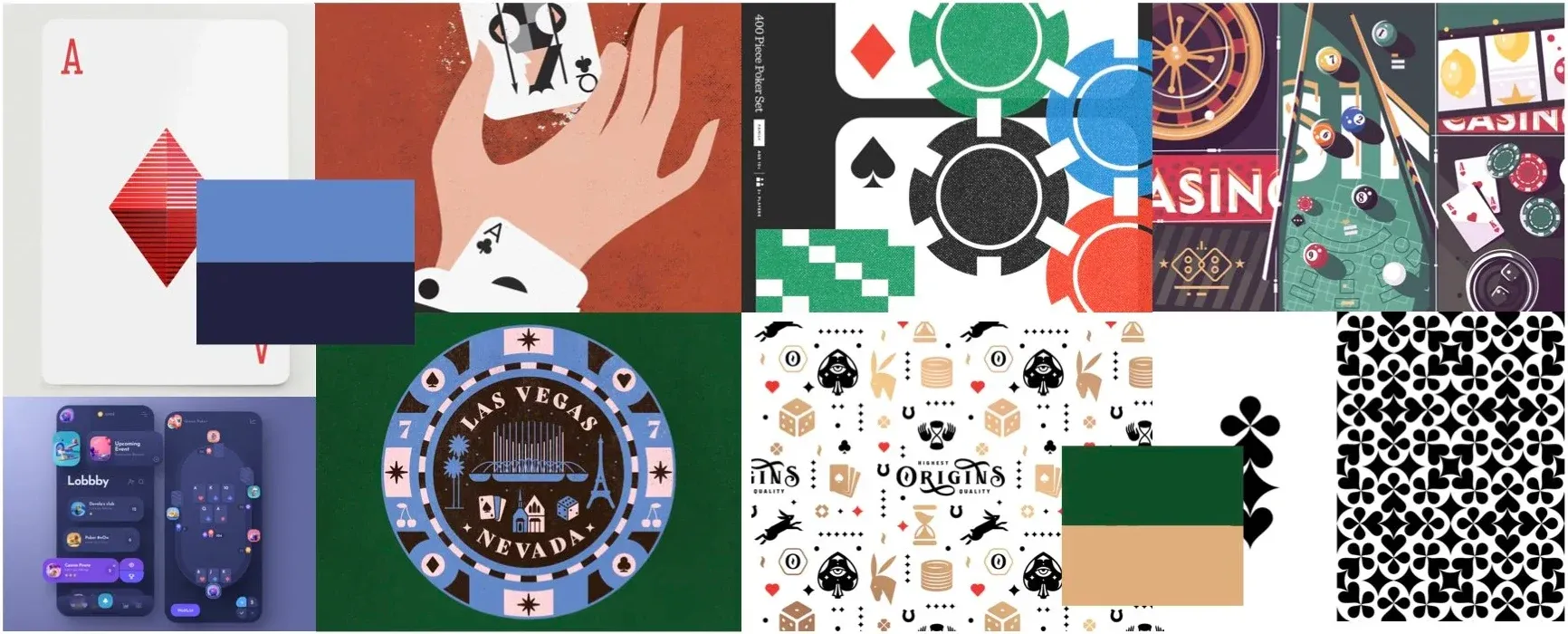
Mood board for a calm, minimal look
Hi-fi elements
Fold is a down arrow, raise an up arrow and check a play icon, readable at a glance. Cards came in non-overlapping and overlapping layouts, so they scale to Rummy.
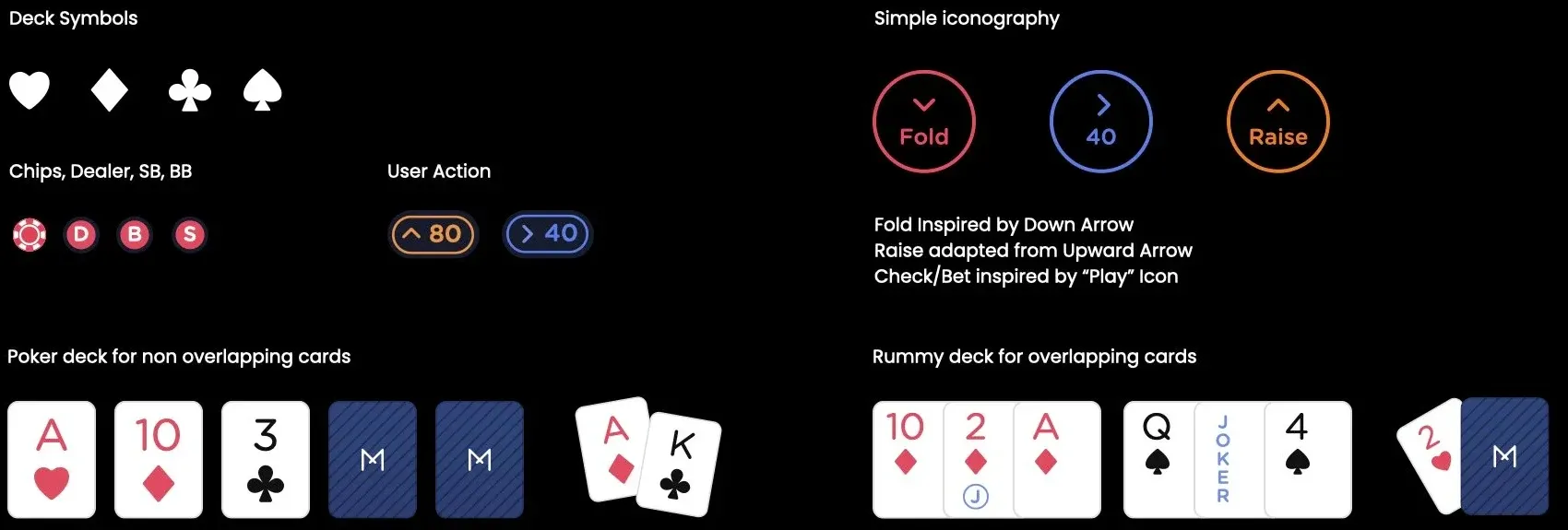
Deck symbols, chips, actions and two card decks built to scale to other games
UI explorations
We tried many colour palettes and visual approaches and put them to an internal vote.
Chose a simple deep blue
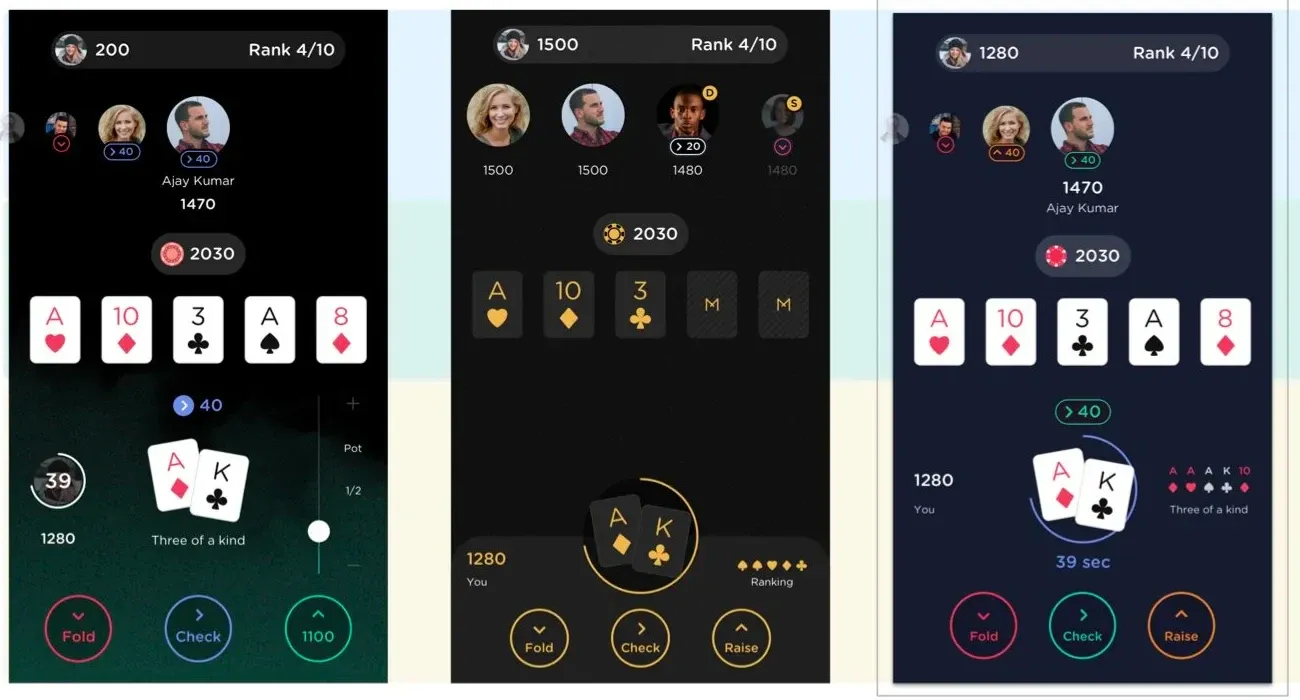
Colour explorations. 23 of 26 picked the simple blue
Final output
Top: opponents. Middle: pot and community cards. Bottom: your cards, timer, stack, hand strength and controls, with a sliding raise panel.
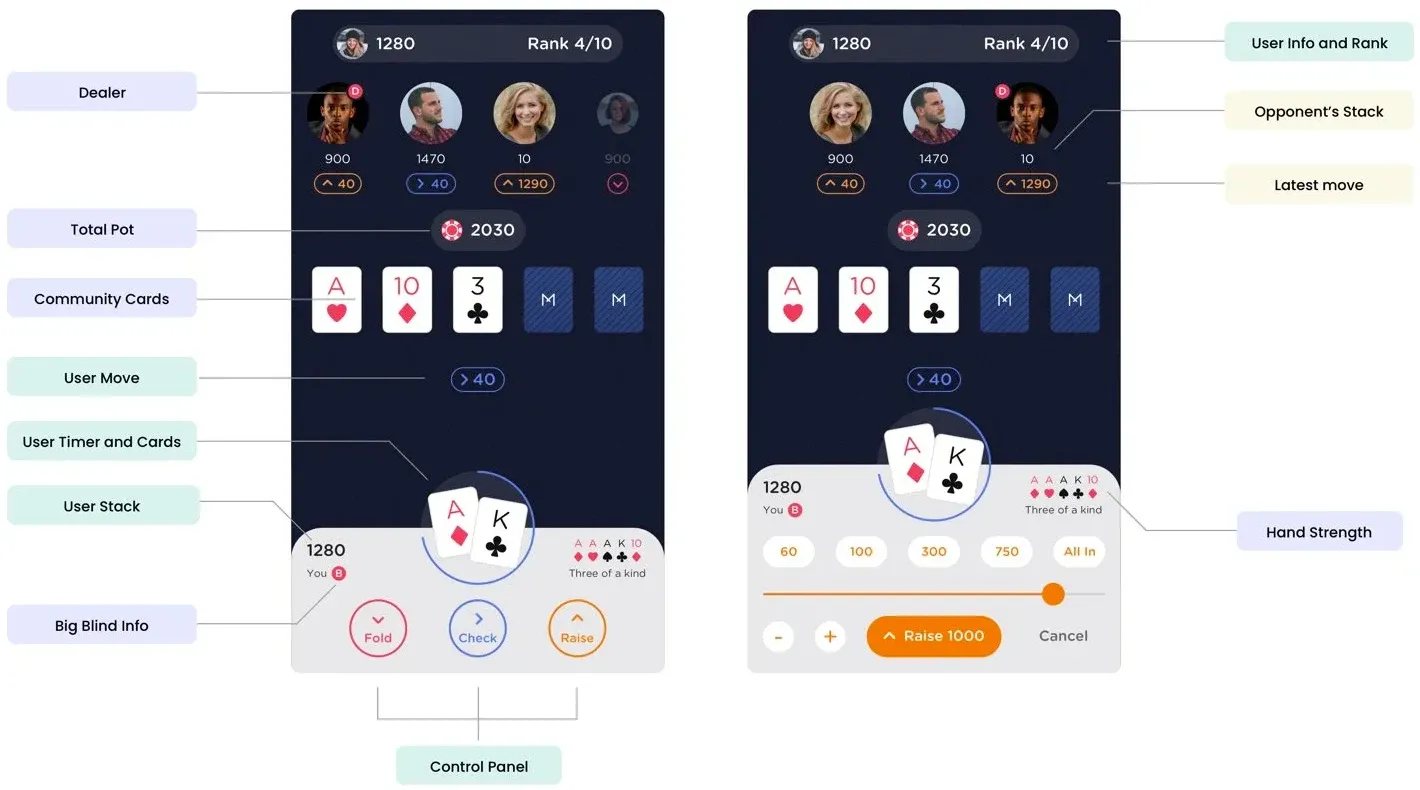
Final table, annotated
Impact
Poker was an instant hit. Between February and May:
Revenue
Monthly active players
Revenue per player
Total deposits
Games played, then 20%+ month on month
Poker also became our testing pod: ideas proven here lifted retention in Carrom and Pool. Marketing moved to the thrill of winning, with a gender-neutral dealer.
Impact
471% increase in revenue
Helped GetMega raise Series A
87% of company revenue from Poker
2% → 14.6% women on the platform, and climbing
Share of revenue by game
Poker took off, month on month
What players told us
Once it shipped, we ran one-on-one interviews with players to learn what to fix and what to build next.
- 01InterviewOne-on-one interviews with players
- 02SortGrouped what they told us into themes
- 03PrioritiseRanked fixes by impact on play
- 04ShipBuilt the top fixes into the next release
See the full user research in Figma ↗
About 160 players rated the design 7.5 out of 10. They liked the cleaner look and seeing every player on one screen. They also told us what was broken, and each finding became a next step.
Players went all in just to scare others. → We showed everyone's play stats.
Beginners didn't know which hands win. → A cheatsheet, walkthrough and in-game prompts.
Drops triggered auto folds. → Connection status on every player in the HUD.
One crash cost a player money. → Stability went to the top of the list.
What we built next
Transparency. Real money gaming is known for cheat bots, so players could see fold ratios, aggression ratios, play style and hand history for everyone. We later added these to other games.
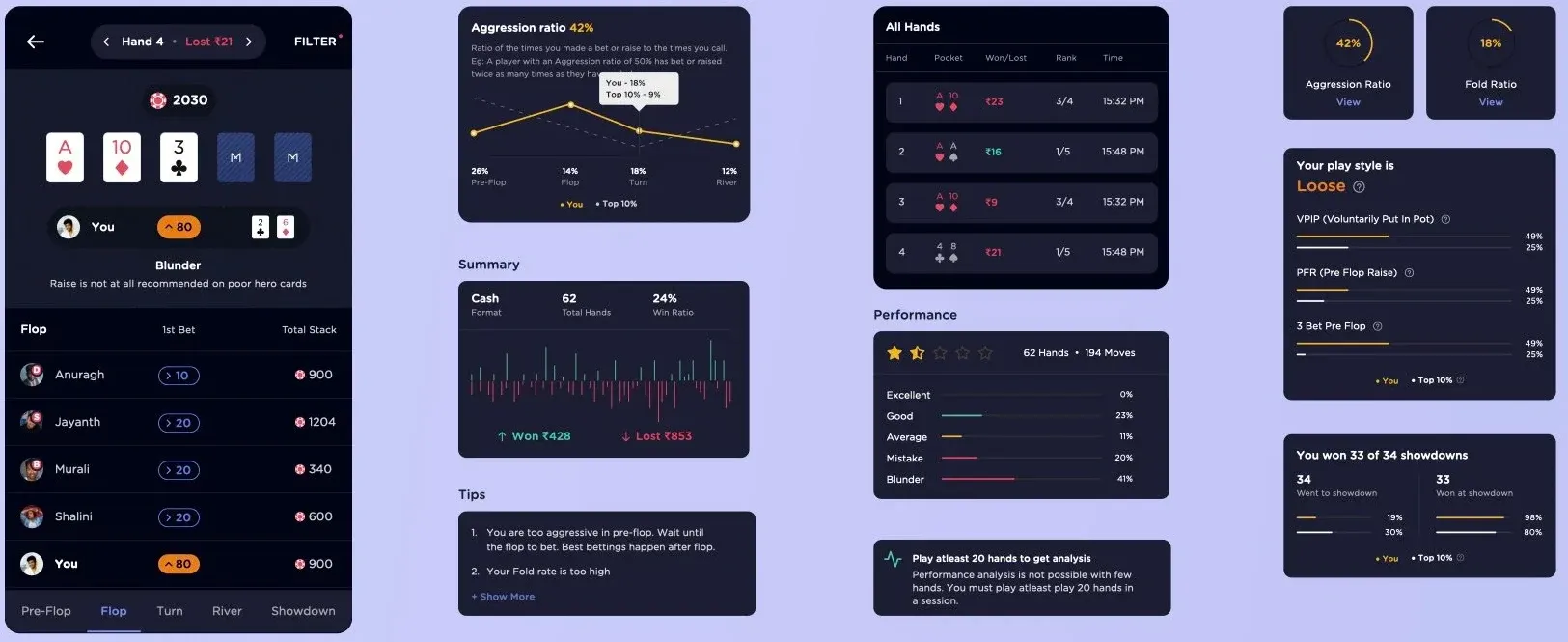
Hand history, fold and aggression ratios, and play style
Help for beginners. A walkthrough, a winning hands cheatsheet and gentle prompts like “You may choose to check instead”, shown before an accidental fold.
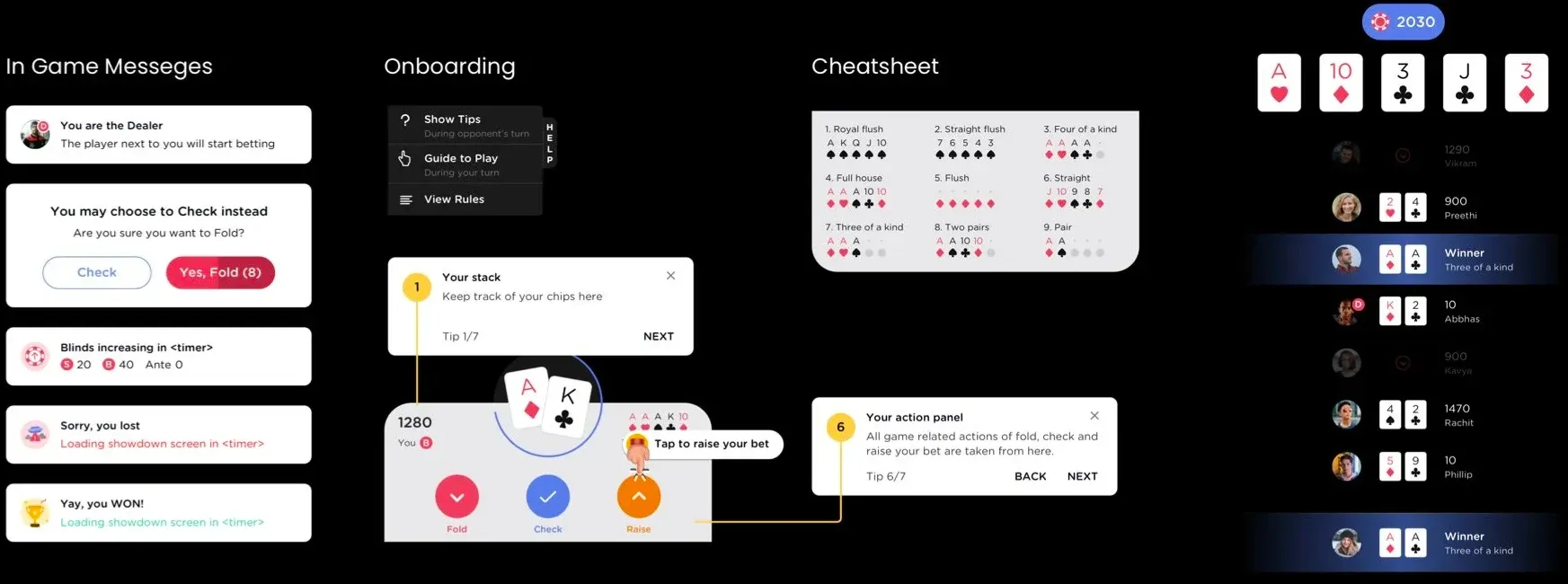
In-game messages, onboarding tips and a hand cheatsheet
HUD and social widget. Each opponent’s stack, name, photo and connection at a glance. Today every multiplayer game on GetMega uses it.
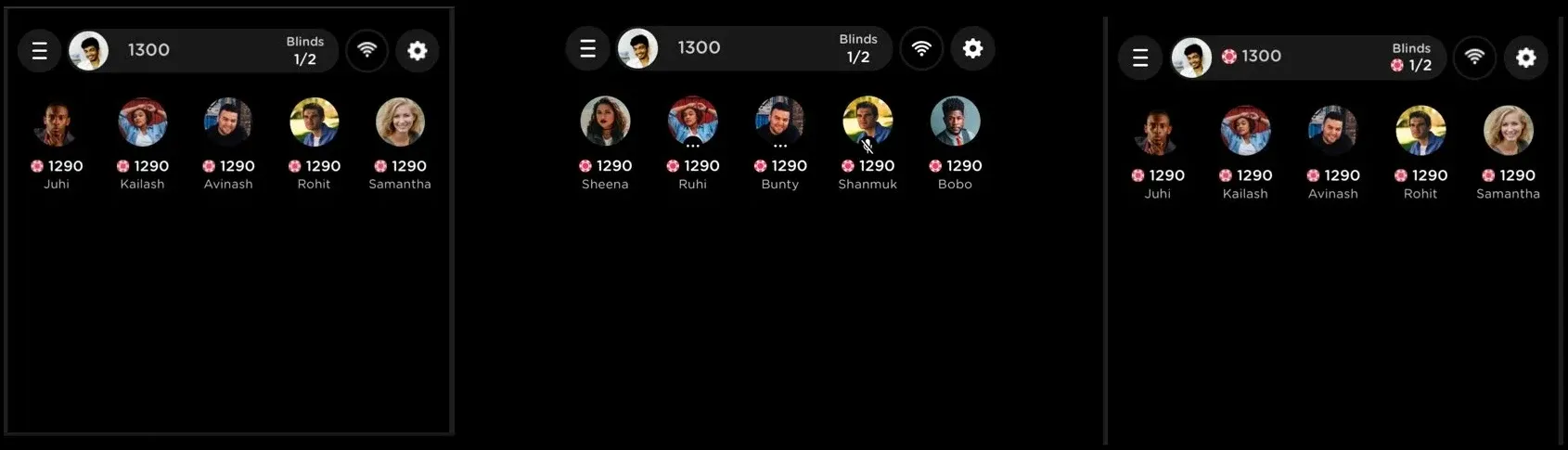
The HUD and social widget, later used across every multiplayer game
Still to come: Omaha poker, multi-table play, spectators, private and social tables, invites and a “guide me to play” mode.
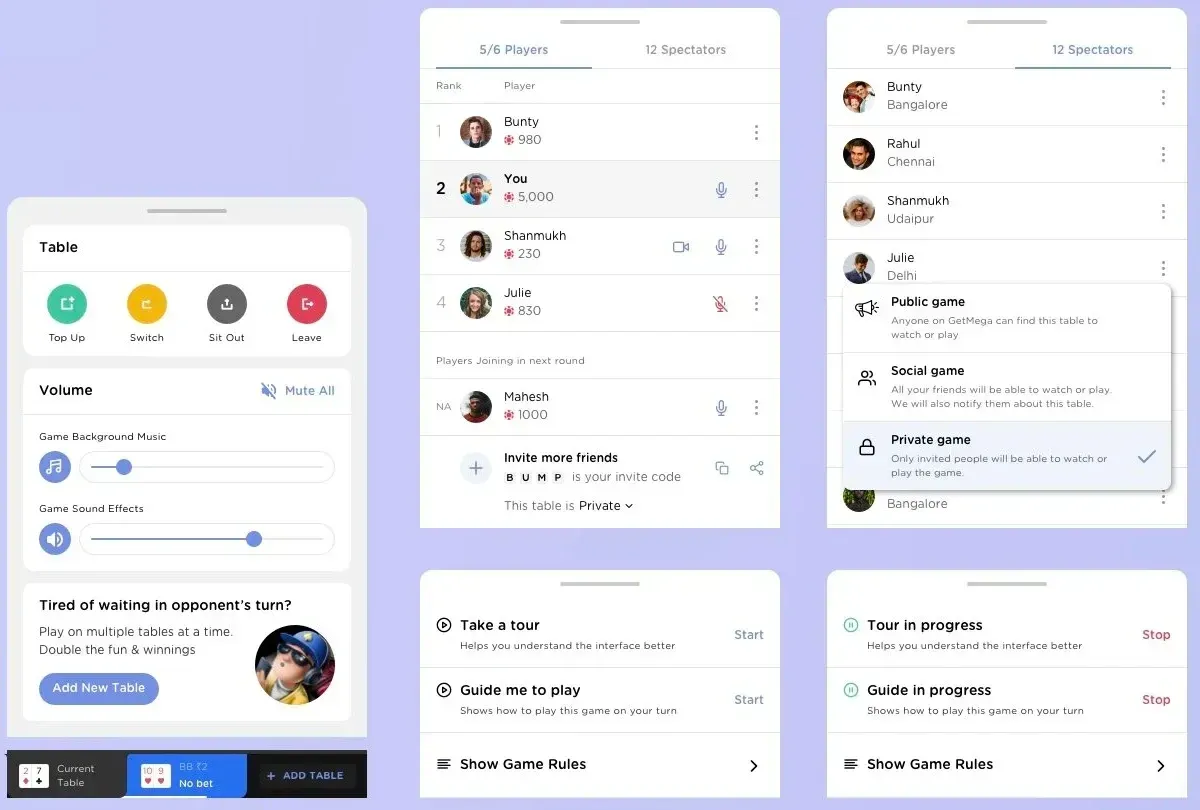
Table controls, players and spectators, and guided tours
See it in action
Would love to talk about this one more in person.